
Studio
Massage Chair
Zero gravity. Total release.
Tight shoulders, sore low back, stiff legs, rollers and kneading work systematically through the body so nothing gets missed.
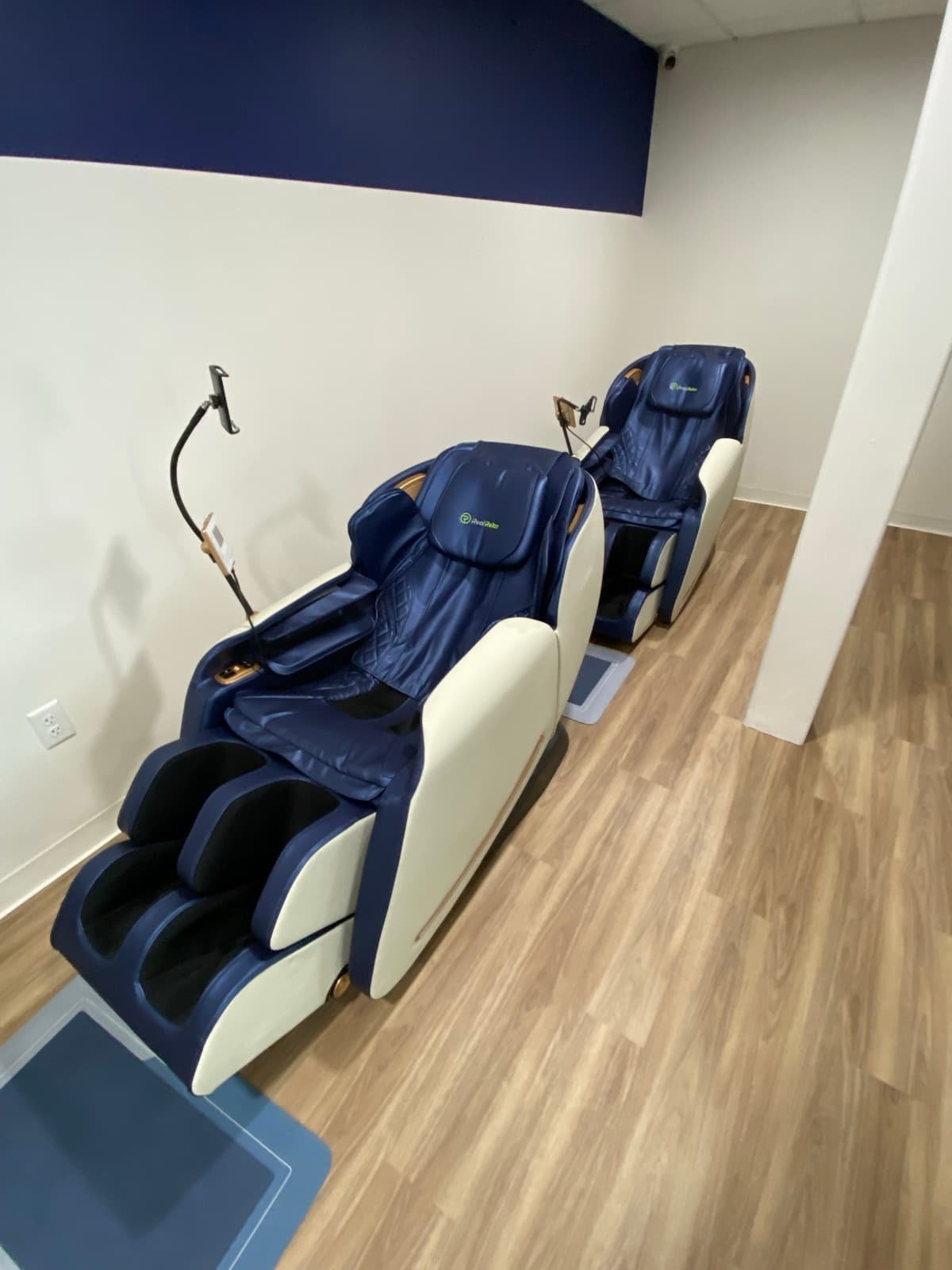
Recline into a zero-gravity position, modeled after the posture NASA developed to distribute astronaut body weight evenly during launch, and let the chair do the rest. Rollers track the contours of your spine, kneading and shiatsu-style movements work through the shoulders, low back, hips, and legs, while air-cell compression cycles ease tension from the calves and feet. The full-body Massage Chair session is a complete, hands-off reset in 10–30 minutes.
Tight shoulders, sore low back, stiff legs, rollers and kneading work systematically through the body so nothing gets missed.
Quiet, hands-off, no conversation required. The chair handles the work while your nervous system finally downshifts.
Compression cycles and rolling movement help move blood and lymph, a noticeable difference for anyone who sits or stands all day.
10–30 minutes from start to finish. The shortest path between a tense body and a looser one, on your schedule.
- Mechanical pressure releases tension. Sustained, rhythmic pressure to muscle tissue is a well-documented pathway to reduced muscle tightness and perceived soreness, the same mechanism that hands-on massage therapy relies on.
- Zero-gravity posture decompresses the spine. Reclining with the knees elevated above the heart distributes body weight evenly across the back, off-loading the lumbar spine and shifting the body into a position the autonomic nervous system reads as "safe to rest."
- Massage downshifts the stress response. Clinical reviews consistently report that massage therapy is associated with reductions in self-reported anxiety, lowered cortisol, and improved mood, even in short sessions.
- Compression supports circulation. Air-cell compression in the legs and feet mimics the muscular pumping that moves blood and lymph back toward the heart, with measurable effects on circulation and post-activity recovery.
For the first 2–3 weeks, while you learn which settings and session length your body responds to best.
Ongoing rhythm for sustained tension relief, stress release, and circulation support.
Heavy training, long travel, desk-heavy weeks, short, frequent sessions tend to outperform one long one.
Typical flow: Recline into a full-body Massage Chair session for 15–30 minutes, the chair adjusts intensity to your comfort, from a gentle wind-down to deeper muscle work.
Approach with care if you have:
None of these are off-limits, our team will walk you through a personalized routine during your consultation. If anything below sounds like you, mention it on your visit.
- ·Recent surgery (any site, within healing timeline)
- ·Severe osteoporosis or fragile bone conditions
- ·Deep vein thrombosis (DVT) or active blood clots
- ·Pregnancy, unless cleared by your provider
- ·Uncontrolled high blood pressure
- ·Pacemaker or implanted medical device
- ·Acute injury, open wounds, or skin infection
- ·Severe disc herniation or unstable spinal condition
📚 Full bibliography, 5 science-backed sources›
Medical Institutions
Clinical Evidence, Massage Therapy
- Journal of Osteopathic Medicine (2024), West & Huzij, systematic review of manual therapy modalities and anxiety (34 studies): 83% of massage-focused studies reported a statistically significant reduction in anxiety.
- PMC (2025), Systematic review and meta-analysis: massage therapy for pain and anxiety in cancer patients (benefit noted; certainty of evidence low).
Mechanical Massage Chairs & Compression
This bibliography is reviewed and refreshed quarterly, see the next refresh window in our process documentation.
Where to start
Come and try Massage Chair.
A Day Pass is one visit, no membership and no commitment. Or begin with a Wellness Snapshot and we will tell you where you actually stand before you decide anything.
Recharge Wellness Club · Danvers, MA