
Studio
Oxygen Studio
Pressurized oxygen. Cellular recovery.
A pressurized session that feeds recovery at the cellular level.
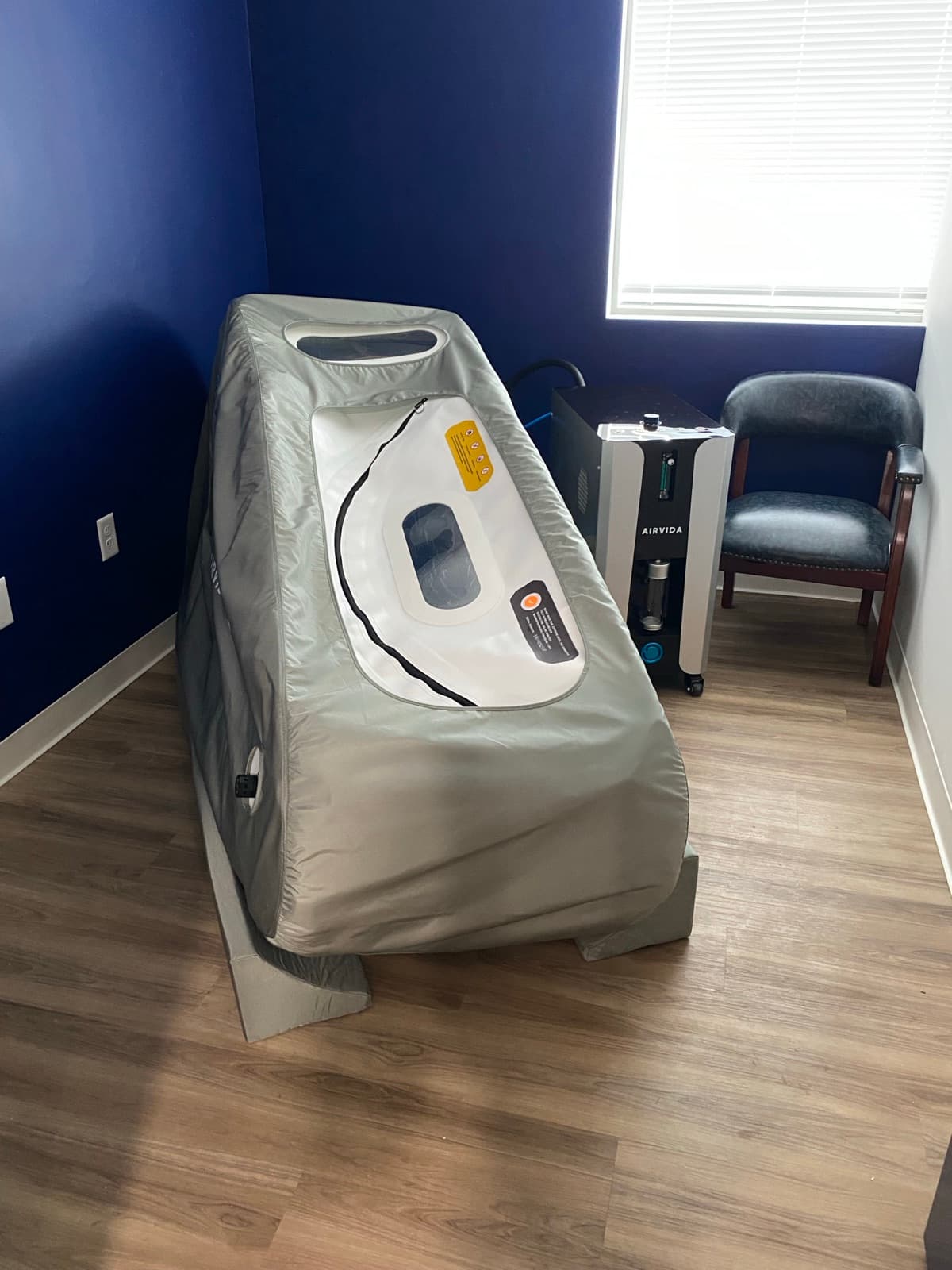
Oxygen Studio houses our mild Hyperbaric Oxygen (HBOT) chamber. You sit comfortably inside, the pressure rises gently above normal atmospheric pressure, and you breathe oxygen-enriched air for about an hour. The combination dissolves more oxygen into your blood plasma than ambient breathing allows, feeding tissues, brain, and the cellular machinery that drives recovery.
The experience itself is calm and uneventful. Members read, listen to music, or rest. The work happens quietly in the background, and the cumulative effect on energy, clarity, and recovery is what brings people back.
Training load, soft-tissue strain, or just a heavy week, HBOT supports the body's repair and recovery processes.
A quieter, sharper head after a session, many members use Oxygen before focus-heavy work or creative blocks.
Not a jolt, not a crash. A steadier baseline through the day, especially when used on a consistent cadence.
A go-to recovery tool when you're returning from a hard week, a cold, or a stretch of poor sleep.
- More oxygen, more places. Under pressure, oxygen dissolves directly into blood plasma, reaching tissues that red-cell-bound oxygen can't fully serve. The mechanism is documented across hyperbaric medicine literature.
- Recovery + healing support. HBOT is FDA-cleared for a defined set of medical indications including problem wounds, certain infections, and decompression illness. Adjacent research continues to examine recovery, neurologic, and post-concussive applications.
- Brain & cognitive support. Emerging research from the NIH and peer-reviewed journals continues to examine HBOT's role in post-stroke recovery, traumatic brain injury, and cognitive function in aging adults.
- Generally well-tolerated. When delivered at modest pressures with appropriate screening, HBOT has a strong safety profile per Mayo Clinic and Cleveland Clinic guidance, with a small, well-defined list of contraindications.
For the first 2–4 weeks, while your body adapts and you build a baseline.
Ongoing rhythm for steady recovery, clarity, and energy support.
Short, focused blocks, returning from illness, heavy training, or a tough stretch.
Typical session: Settle into the chamber, pressure rises gently over 5–10 minutes, ~45 minutes at session pressure, then a slow return to ambient. Plan on about an hour, door to door.
Approach with care if you have:
None of these are necessarily off-limits, our team will walk you through a personalized routine during your consultation. If anything below sounds like you, mention it on your visit and we'll take it from there.
- ·Untreated pneumothorax (collapsed lung)
- ·Uncontrolled seizure disorder
- ·Recent ear or sinus surgery, or active congestion
- ·Difficulty equalizing ear pressure
- ·Severe claustrophobia (let us walk you through the chamber first)
- ·Pregnancy, unless cleared by your provider
- ·Active fever or respiratory infection
- ·Certain chemotherapy agents, clear with your oncologist
📚 Full bibliography, 7 science-backed sources›
Medical Institutions
Regulatory & Government
Clinical Evidence, Recovery & Brain
- PMC (2025), Review of hyperbaric therapy and HBOT in the treatment of neurological disorders, including PTSD and dementia dosing.
- PMC (2025), HBOT to improve cognitive function in Alzheimer's disease via autophagy-related signaling pathways.
- PubMed (2026), Effects of HBOT on exercise-induced muscle injury and soreness: a systematic review and meta-analysis of 10 RCTs.
Sources prioritize authoritative medical institutions (Cleveland Clinic, Mayo Clinic), regulators (FDA), and the NIH / PubMed / PMC peer-reviewed literature. This bibliography is reviewed and refreshed quarterly, see the next refresh window in our process documentation.
Where to start
Come and try Oxygen Studio.
A Day Pass is one visit, no membership and no commitment. Or begin with a Wellness Snapshot and we will tell you where you actually stand before you decide anything.
Recharge Wellness Club · Danvers, MA