
Studio
Testing Studio
Measure progress. Adjust your plan.
Five focused, non-invasive tests, taken on the same protocol each visit so the trends are clean.
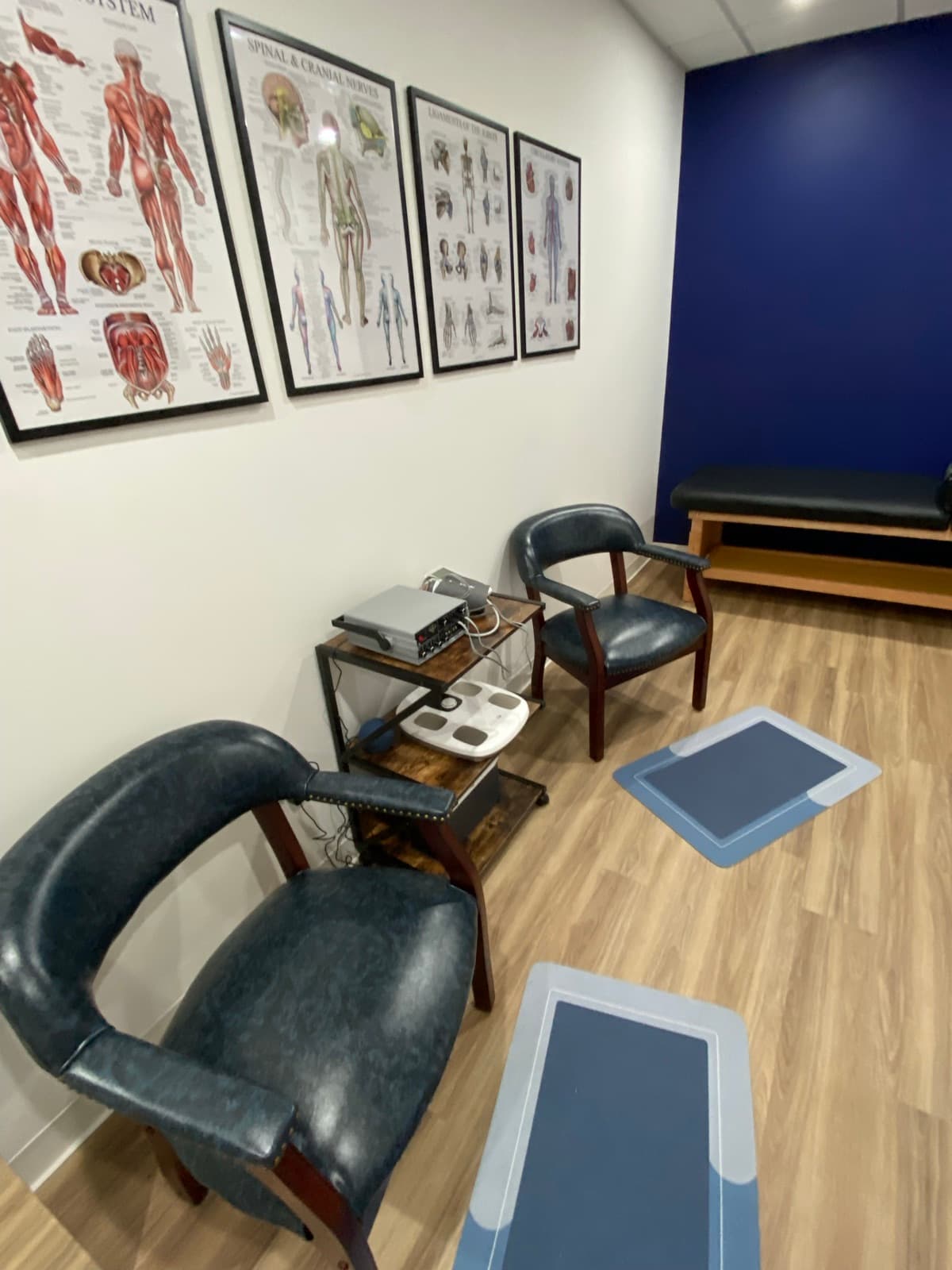
Testing Studio is built around a curated suite of five non-invasive, repeatable tests, the same instruments and the same protocol every visit. Members move through the InBody Body Composition Scale, the Kardia 6L EKG, the InBody Blood Pressure monitor, the O2 Test (fingertip pulse oximetry), and the Vivoo Wellness Test, an at-the-club urinalysis strip read by a smartphone app. No needles, no clinical gauntlet. A calm, consistent picture of how your training, sleep, hydration, and recovery routines are actually landing in the body.
The framework is simple: measure twice, adjust once. A single number is just a number, the same five numbers, taken under the same conditions every four to twelve weeks, become a signal. That signal is what makes a plan smarter. It's why Testing Studio is reserved for members: the value compounds with consistent retesting, and it's the trend line, not any single reading, that earns its keep.
Medical-grade multi-frequency bioelectrical impedance (BIA), body fat %, lean muscle mass, visceral fat, total body water, and per-limb segmental analysis. The industry standard for tracking composition changes over time, far beyond what a household scale can show.
FDA-cleared, six-lead personal EKG from AliveCor. A ~30-second reading screens for normal sinus rhythm, atrial fibrillation, bradycardia, and tachycardia. Not a substitute for a clinical ECG, a clean, calm rhythm check on a regular cadence.
Clinical-grade blood pressure monitor with consistent seated positioning for repeatable readings. Captures systolic, diastolic, and pulse, taken the same way each visit so small drifts are visible early instead of after they matter.
Fingertip pulse oximetry, blood oxygen saturation (SpO₂) plus resting pulse. A quick, non-invasive marker for cardiovascular and respiratory function, and a useful anchor alongside your composition and blood pressure trends.
On-site urinalysis strip read by the Vivoo smartphone app, a nine-marker snapshot covering hydration, ketones, calcium, magnesium, sodium, pH, oxidative stress (vitamin C indicator), and protein. A practical lifestyle check, not a clinical diagnostic.
A first-visit run of all five tests anchors the trend line, composition, rhythm, blood pressure, oxygen saturation, and a hydration / micronutrient read, all captured the same way every time.
Five objective inputs make your training, sleep, recovery, and hydration plan adjustable instead of guesswork. The numbers, together, not individually, tell us where to push and where to back off.
A scheduled retest across the same five markers is a calm, non-judgmental reason to stay consistent. Self-monitoring on a regular cadence is one of the most reliably effective behavior-change levers in the research.
Lean mass, resting blood pressure, heart rhythm, and oxygen saturation are among the most consistent long-term health signals, worth watching for decades, not days, and easiest to read together.
- Body composition outperforms the scale. Cleveland Clinic notes that body-fat percentage, lean mass, and where weight is distributed are stronger health signals than total body weight alone. The InBody scale uses multi-frequency bioelectrical impedance to estimate lean mass, fat mass, visceral fat, and total body water on a quick, painless, and repeatable protocol, well-suited to retesting on a consistent cadence.
- Rhythm and pressure tell the cardiac story together. The Kardia 6L EKG is an FDA-cleared personal EKG that screens for normal sinus rhythm, atrial fibrillation, bradycardia, and tachycardia in roughly 30 seconds. The InBody blood pressure monitor pairs it with consistent seated positioning, so small drifts in systolic, diastolic, or resting pulse show up on the trend line before they become a clinical conversation.
- Oxygen saturation is the "fifth vital sign." Fingertip pulse oximetry, what we call the O2 Test, is a non-invasive, light-based read of blood oxygen saturation (SpO₂) and pulse rate. It's described in clinical literature as a quick, non-invasive monitoring technique that's become a standard vital sign across cardiovascular and respiratory care.
- Holistic markers fill in the lifestyle picture. The Vivoo Wellness Test is an at-the-club urinalysis strip read by smartphone, nine markers including hydration, sodium, magnesium, calcium, pH, ketones, oxidative stress (vitamin C), and protein. It isn't a clinical diagnostic; it's a structured lifestyle read that gives the rest of the assessment suite context, especially around hydration, recovery, and dietary patterns.
All five tests in one calm sitting, InBody composition, Kardia 6L, blood pressure, O2, and Vivoo, to establish the numbers we'll keep coming back to.
The same five tests under the same protocol. Tight cadence (4–6 weeks) when you're actively dialing in a change; quarterly (8–12 weeks) once a plan is working.
Optional run around a program shift, life event, or after a recovery push, a quick read on whether the numbers moved with the change.
Approach with care if you have:
The five tests in Testing Studio are generally very safe, none are invasive, and most readings are simply taken while you sit or stand quietly. A few items per test are worth flagging during your consultation so we can adapt the protocol or substitute another marker.
- ·InBody (BIA): a pacemaker, implanted defibrillator, or other implanted electrical device, BIA passes a tiny current and is generally not recommended; we'll lean on the other four markers
- ·InBody (BIA): pregnancy, BIA reference equations aren't validated during pregnancy; we'll skip it
- ·Kardia 6L EKG: not a substitute for a clinical 12-lead ECG; please continue working with your physician for any cardiac diagnosis or treatment
- ·Blood Pressure: avoid caffeine, nicotine, or hard exercise within 30 minutes of testing; we'll seat you quietly for a couple of minutes before the reading
- ·O2 Test: nail polish, fake nails, and very cold hands can lower the reading; we'll warm and clear the fingertip first
- ·Vivoo Test: hydration status affects the strip; ideally we test mid-day rather than on a first-morning sample for the most consistent read
📚 Full bibliography, 9 science-backed sources›
Body Composition & BIA (InBody)
- Annals of Family Medicine (2025), Body fat percentage vs BMI as a predictor of mortality: direct body-composition measures show a stronger association with all-cause and heart-disease mortality than BMI alone.
- Physiological Research (2025), Multi-frequency bioelectrical impedance analysis in practice: validated prediction equations for body composition (TBW, fat-free mass, fat mass).
Heart Rhythm (Kardia 6L EKG)
- JACC: Advances (2025), Systematic review and meta-analysis: consumer single-lead ECG detects atrial fibrillation with ~95% sensitivity and specificity vs a clinical 12-lead ECG, supporting personal rhythm screening.
- Cleveland Clinic (2025), Atrial fibrillation (AFib): symptoms, diagnosis, and why early rhythm screening matters.
Blood Pressure (InBody BP)
Pulse Oximetry (O2 Test)
Self-Monitoring & Behavior Change
Testing Studio assessments at Recharge are non-diagnostic. The Kardia 6L EKG is FDA-cleared as a personal EKG; it is not a substitute for a clinical 12-lead ECG. The Vivoo Wellness Test is a consumer lifestyle test, not a clinical urinalysis. Readings here are intended for trend tracking and plan adjustment, not clinical diagnosis. Sources are reviewed and refreshed quarterly per Recharge Danvers' process.
Where to start
Come and try Testing Studio.
A Day Pass is one visit, no membership and no commitment. Or begin with a Wellness Snapshot and we will tell you where you actually stand before you decide anything.
Recharge Wellness Club · Danvers, MA