
Studio
Contrast Studio
Heat. Cold. Reset.
Post-training soreness, heavy legs, slow bounce-back, the heat-then-cold swing is built for getting the body ready to train again.
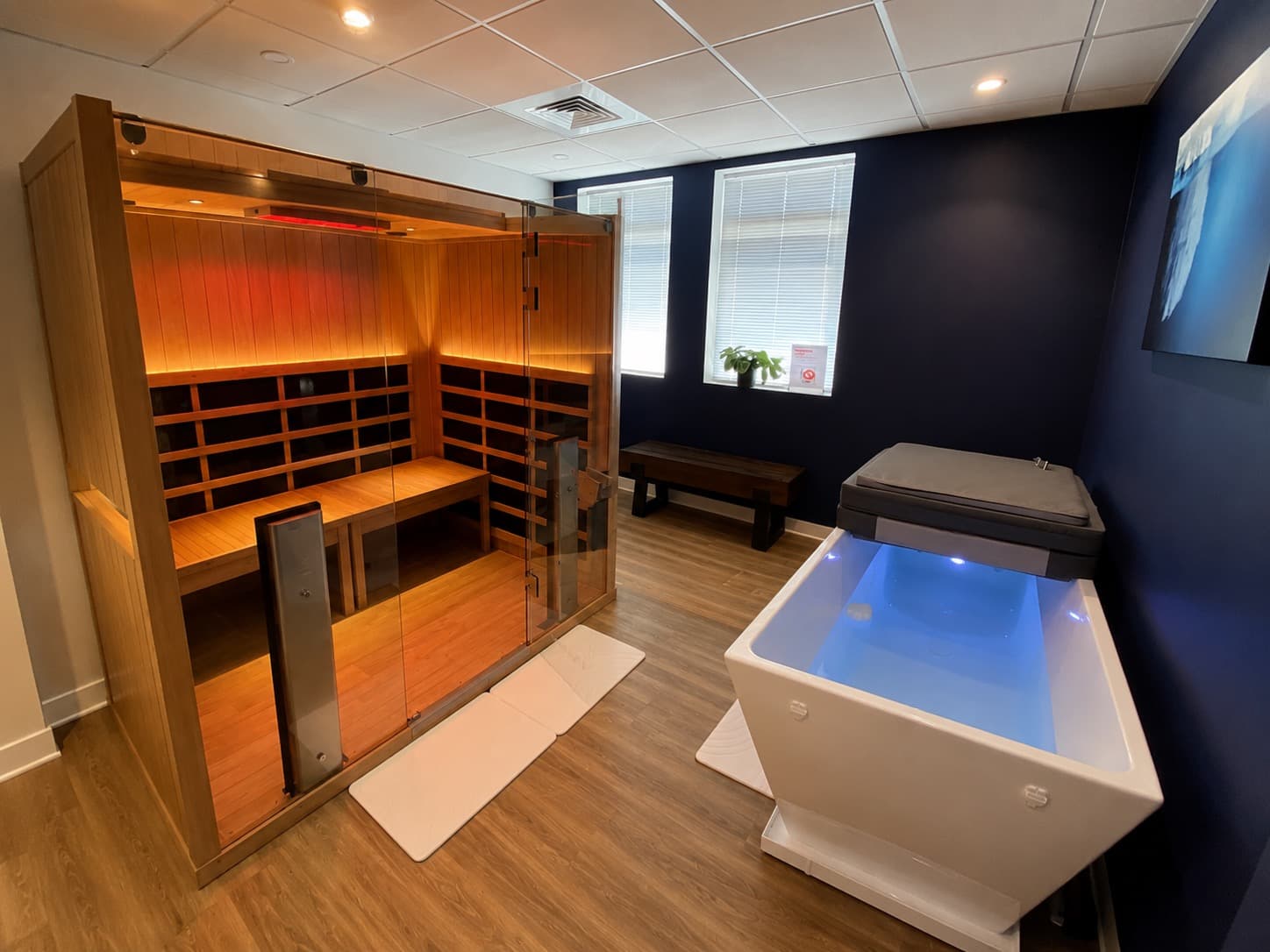
Contrast Studio pairs a Full Spectrum Infrared Sauna with a Cold Plunge into a single private session. The protocol is simple: warm the body deeply, step into cold, and let the swing between the two do the work. Each visit alternates heat and cold to drive circulation, flush metabolic load from training, and build the kind of physiological resilience that carries over into the rest of the week.
It is our most-requested member-only routine, and the one members return to most often. Athletes use it after training. Desk-bound members use it to break up a stagnant body and a racing mind. The session is short, the room is private, and the effect lands on the same day, looser, clearer, and noticeably more resilient by the time you leave.
Post-training soreness, heavy legs, slow bounce-back, the heat-then-cold swing is built for getting the body ready to train again.
Sluggish, cold-handed, stagnant days, alternating vasodilation and vasoconstriction moves blood and lymph through the system.
A trained ability to stay composed under stress, the cold plunge is one of the cleanest ways to practice it on purpose.
A wired, overstretched week, the sauna unwinds the body, the plunge resets the head, and you leave the room neither.
- Heat then cold drives circulation. Heat dilates blood vessels and raises core temperature; cold immersion constricts them. Cycling between the two acts as a circulatory pump, the mechanism a 2025 scoping review identifies as central to contrast therapy's effect on pain, range of motion, and recovery.
- Sauna use is associated with cardiovascular and longevity benefits. A 2025 narrative review of long-term Finnish data reports that frequent sauna bathing (4–7 sessions per week) is associated with a 63% reduction in sudden cardiac death and a 50% reduction in fatal cardiovascular disease.
- Deliberate cold exposure supports stress recovery. A 2025 PLOS One systematic review and meta-analysis of 11 trials (3,177 adults) found that cold-water immersion reduced stress 12 hours after exposure and improved sleep and self-reported quality of life.
- Heat-shock response. Sauna heat induces heat-shock proteins, which support cellular repair and protein quality control, a recovery mechanism that compounds with consistent use.
For the first 2–3 weeks, while your body builds heat and cold tolerance. Short plunges, gentle sauna time.
Ongoing rhythm for recovery, circulation, and resilience. Most members settle here.
Heavy training blocks, demanding work weeks, increase frequency with attention to hydration and recovery.
Typical flow: Full Spectrum Infrared Sauna 15–25 minutes → Cold Plunge 1–3 minutes → repeat as tolerated, finish on cold. Hydrate before and after. The sweet spot is consistency, not extreme intensity.
Approach with care if you have:
None of these are off-limits, our team will walk you through a personalized routine during your consultation. If anything below sounds like you, mention it on your visit and we'll adjust heat, cold, and duration accordingly.
- ·Uncontrolled blood pressure or unstable heart disease
- ·Recent cardiac event or surgery
- ·Raynaud's phenomenon or peripheral circulation conditions
- ·History of fainting, dizziness, or seizure disorder
- ·Pregnancy, unless cleared by your provider
- ·Open wounds, active skin infection, or fever
- ·Recent surgery (within clearance window)
- ·Severe heat or cold intolerance
📚 Full bibliography, 10 science-backed sources›
Medical Institutions
- Cleveland Clinic (2025), Ice vs. heat for pain: when each modality is appropriate, and the circulatory basis of the response.
- Cleveland Clinic (2024), Get Your Sweat On: the benefits of a sauna for cardiovascular health, recovery, and pain.
- Cleveland Clinic (2026), Health benefits of cold plunges: focus, soreness, inflammation, and safety guidance.
- Harvard Health (2025), Research highlights health benefits from cold-water immersions: stress, sleep, and quality of life.
- Mayo Clinic (2024), Infrared sauna: cardiovascular response, safety considerations, and clinical context.
Clinical Evidence, Sauna
- Cureus (2025), The role of sauna bathing in ischemic heart disease: narrative review of mortality, hemodynamics, and emerging clinical applications.
- American Journal of Preventive Cardiology (2025), Non-acute effects of passive heating on cardiometabolic risk and vascular health: systematic review and meta-analysis of randomized controlled trials.
Clinical Evidence, Cold Exposure
Clinical Evidence, Contrast Therapy
This bibliography is reviewed and refreshed quarterly, see the next refresh window in our process documentation.
Where to start
Come and try Contrast Studio.
A Day Pass is one visit, no membership and no commitment. Or begin with a Wellness Snapshot and we will tell you where you actually stand before you decide anything.
Recharge Wellness Club · Danvers, MA